
FMP Essentials | October 2026
The Brain, the Body, and the Patterns That Protect Us
A Note From Dr. Elyaman
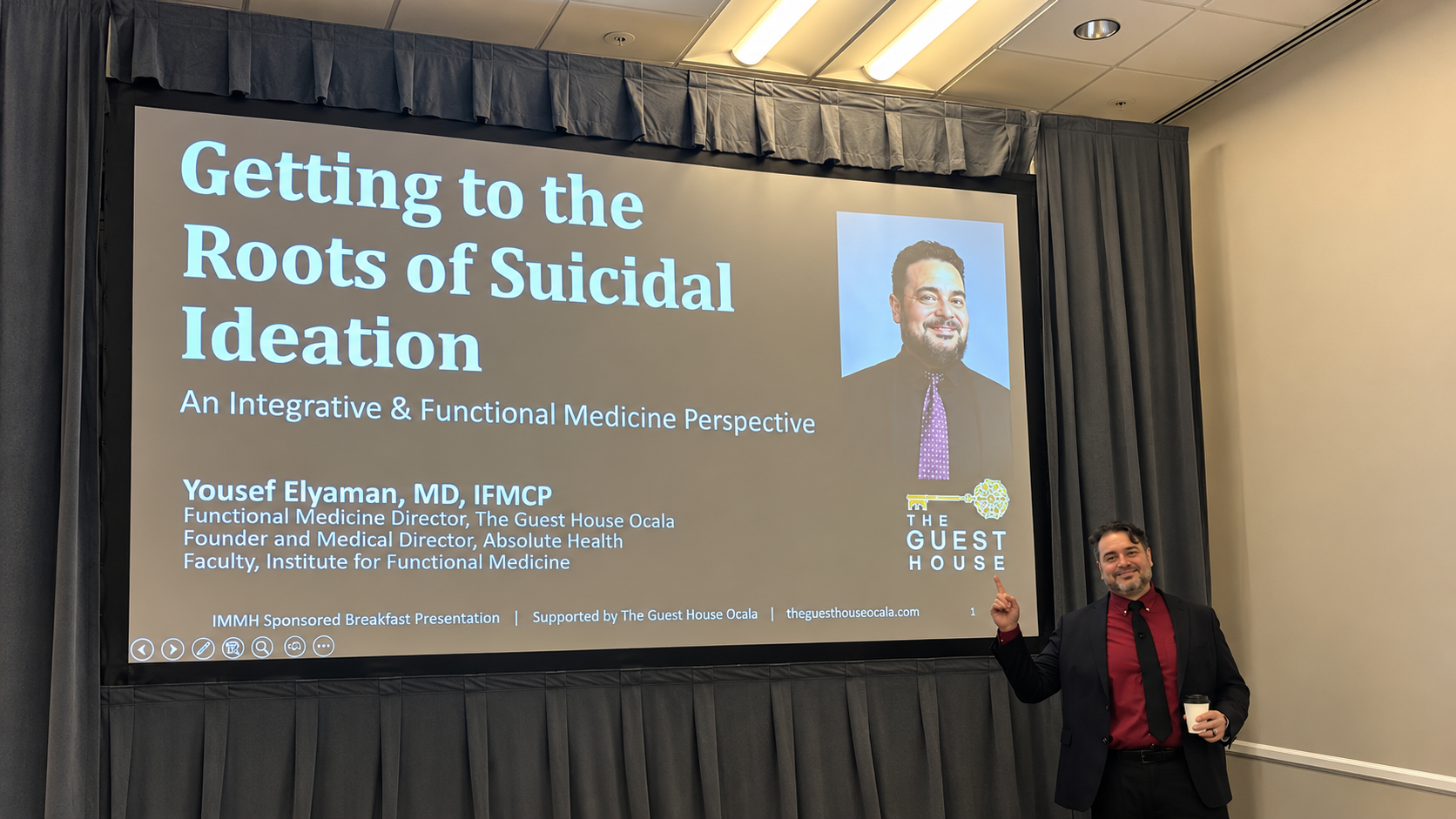
I just came back from IMMH in San Diego, and one theme kept surfacing in conversation after conversation:
We still struggle with the language around trauma.
Some people hear the word trauma and think everything is psychological. Others push back and say, "Not everything is trauma."
I agree. Not everything is trauma.
But I also think we sometimes misunderstand what trauma means biologically.
Trauma is not simply what happened to you. It is also what your nervous system learned when you felt unsafe, overwhelmed, or without control.
In those moments, the brain does exactly what it was designed to do. It creates patterns to protect you. You can think of it almost like an operating system.
Much of that programming then runs outside conscious awareness. We do not have an honest scientific percentage for how much of the brain is "subconscious," but we do know that enormous amounts of prediction, pattern recognition, autonomic regulation, and learned behavior happen without deliberate thought.
That is useful when danger is real. The problem is when the danger is gone, but the operating system keeps running.
The body may remain biased toward vigilance and protection. Sleep can change. Autonomic tone can change. Digestion, glucose regulation, immune signaling, pain processing, and hormonal signaling can all be affected.
And here is the part I think matters most.
If a patient has sleep apnea, thyroid disease, infection, toxin exposure, insulin resistance, nutritional deficiency, or another active biological problem, treat it. Trauma should never become an excuse to stop looking for physiology.
But sometimes removing the original trigger is not the entire answer, because the nervous system has learned a pattern of protection. Part of healing may involve helping the brain and body recognize:
The threat is not happening now.
That does not mean illness is "all in your head." It means the brain is part of the body, and sometimes the patterns that once protected us can continue long after we need them.
That idea has been on my mind a lot since IMMH.
Yousef Elyaman, MD, IFMCP
In This Edition
Mastermind: Postmenopausal hormones and how to price your services
Member Spotlight: Celebrating Dr. Alaa Nazzal
FMP Updates: IMMH, ILADS, Taming the Psyche, and a new public podcast
Clinical Perspective: Four practical lessons on neuroinflammation
Podcast Spotlight: Dr. Robert Rountree on what may be fueling brain inflammation
Blog: What may keep chronic neuroinflammation going
This Month in the Mastermind
Silver Clinical Deep Dive: Postmenopausal Hormones, Part 1
We walked through how to evaluate and support the postmenopausal patient, including use of the Menopause Rating Scale to track symptoms, why progesterone is often an important starting point, what the Women's Health Initiative did and did not show, and how to think through estradiol choices and monitoring.
Members also brought real cases, and we worked through them together. Part 2 continues the series.
Gold Leadership and Success: How to Price Your Services
You voted for this topic, and it kicked off our new money series. We built a seven-step framework:
Define your goal → know your costs → research your market → understand your value → run the numbers → use pricing psychology → test and adjust.
A few pearls from the session:
- Consider 50-minute and 25-minute visits instead of filling every hour completely.
- Cluster appointments instead of scattering them across the week.
- Small price increases can sometimes hurt more than help when they cross an important psychological threshold.
- Establish your regular price first, then use introductory pricing strategically.
- Hospitality is often the extra 5 percent that justifies the fee.
- Put a formal pricing review on your calendar every January.
Coming next: money scripts and the psychology behind pricing, followed by packages and memberships.
Replays of both sessions, along with the October 2 Community Hour Hot Seats, are available in the member area.
Bronze members: Gold and Silver reopen in January. Join the waitlist and you will hear 48 hours before everyone else.
Member Spotlight
Dr. Alaa Nazzal Named Dean of IMC Medical College

We love celebrating what FMP Essentials members are doing beyond the classroom.
Dr. Alaa Nazzal, MD, EMBA, has been named Dean of IMC Medical College in Jeddah, Saudi Arabia.
Alaa has spent years at the intersection of clinical medicine, medical education, and leadership. Now he has the opportunity to help shape an entire generation of future physicians.
A great clinician can influence thousands of patients. A great educator can influence the physicians who will go on to care for thousands more.
Congratulations, Alaa. We are proud to have you as part of this community and excited to see what comes next.
What's New at FMP Essentials?
New Public Podcast: Growing a Functional Medicine Practice Without Putting Your License at Risk
This month's public podcast features attorney Scott Rattigan discussing how functional medicine practitioners can safely grow their practices while navigating telemedicine, delegation, artificial intelligence, healthcare compliance, and protection of their medical licenses.
Available now on YouTube, Apple Podcasts, and Spotify.
IMMH 2026
I recently had the opportunity to give two presentations at the Integrative Medicine for Mental Health Conference in San Diego: Getting to the Root Cause of Suicidal Ideation and The Metabolic Brain: How Cardiometabolic Dysfunction Shapes Mental Health.
Both explored an idea I think is increasingly important: mental health symptoms can coexist with metabolic, inflammatory, endocrine, sleep-related, neurological, and other medical contributors. Looking for those contributors should complement good psychiatric care, not replace it.
It was also great connecting with so many FMP Essentials members and other clinicians doing fascinating work in brain and mental health.
Taming the Psyche
Our free live session, Taming the Psyche, takes place today, October 16 at 3:00 PM Eastern, supported by The Guest House Ocala. We will explore the psychological, emotional, and spiritual drivers of health.
ILADS Is Next
Next week I will be speaking at the 2026 ILADS Annual Scientific Conference, October 22 to 25, in Herndon, Virginia. My presentation will explore a systems-based diagnostic approach to cognitive decline and complex chronic disease.
Going to ILADS? Join our FMP Essentials Conference Crew on WhatsApp so we can find each other, compare notes, grab coffee, and stay connected between sessions.
Clinical Perspective
Neuroinflammation: 4 Things Worth Thinking About
Brain fog, mental fatigue, and changes in mood often make practitioners wonder about neuroinflammation. But before asking, "What is causing the inflammation?" ask, "What exactly is the patient experiencing?"
1. Clarify what "fatigue" means
Physical exhaustion, sleepiness, difficulty concentrating, and difficulty sustaining mental effort are not the same symptom. Ask what the patient actually experiences and how it affects daily function before assigning a mechanism.
2. Do not forget the mouth
Functional medicine practitioners routinely investigate the gut. Do not forget oral health. Ask about bleeding gums, periodontal disease, dental care, and when the patient last had a dental evaluation. Observational research has associated periodontal disease with increased dementia risk, although that does not establish that periodontal disease is causing an individual patient's cognitive symptoms.
3. Know what the biomarker actually measures
Dr. Robert Rountree discusses several increasingly available neurological biomarkers:
- NfL: reflects neuroaxonal injury
- GFAP: reflects astrocytic injury or reactivity
- Phosphorylated tau: selected assays can help assess Alzheimer-related pathology in appropriate patients
These are not interchangeable tests for "brain inflammation."
4. Use the timeline
Did the symptoms begin after an infection? Are they fluctuating or progressive? How do they relate to sleep, medications, stress, metabolic health, or other changes? A post-infectious pattern may be important, but it does not by itself prove persistent infection or neuroinflammation.
Clinical Takeaway
Clarify the symptom before assigning the mechanism. Consider oral and systemic health, understand what each biomarker actually measures, and let the timeline guide your differential. Neuroinflammation may be part of the picture. It should never replace a careful medical evaluation.
Periodontal disease and dementia: Demmer RT, et al. Neurology. 2020. doi:10.1212/WNL.0000000000010312
Podcast Spotlight
What's Fueling Brain Inflammation? With Dr. Robert Rountree
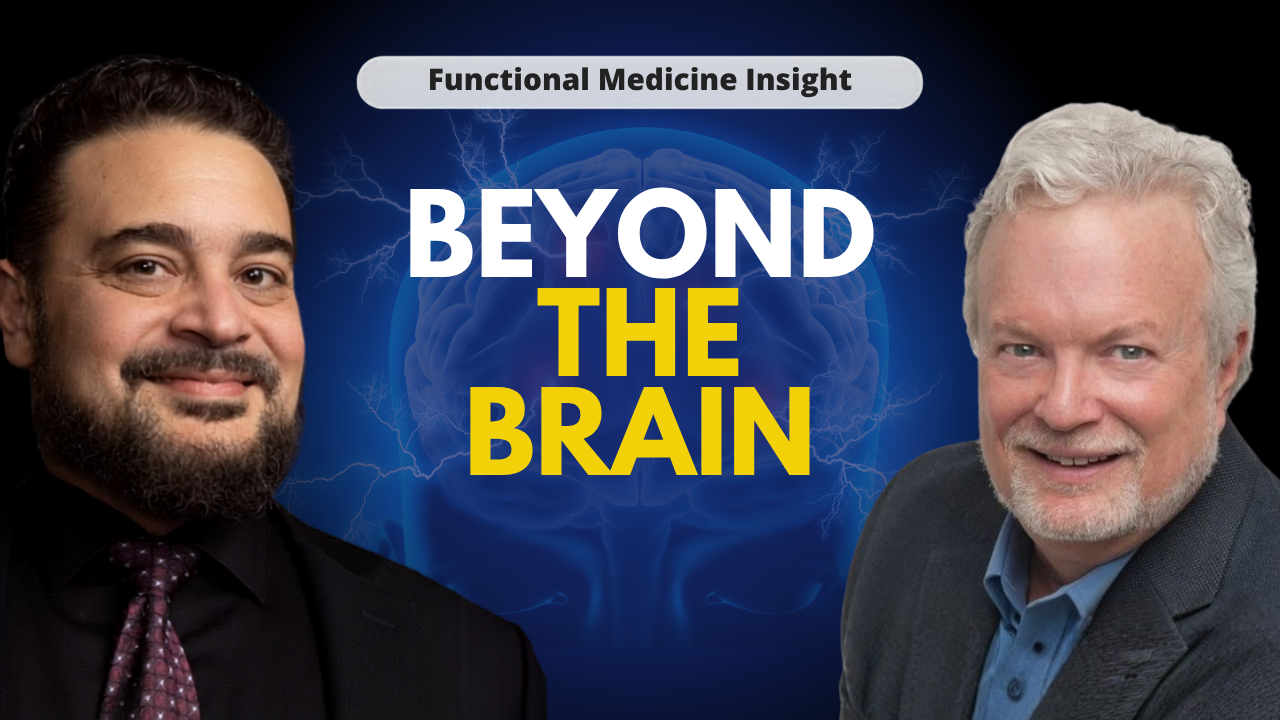
In this month's member episode of the FMP Essentials Show, Dr. Robert Rountree joins me to explore how processes elsewhere in the body may influence what happens inside the brain. We discuss:
- Brain fog and cognitive fatigue
- Oral and gut health
- NfL, GFAP, and phosphorylated tau
- Persistent symptoms after infection
- Mitochondria and metabolic health
- Sleep, nutrition, and selected nutraceuticals
One idea worth remembering: sometimes understanding the brain requires looking beyond the brain.
Bronze members can find the episode under Expert Interviews, Insights & Podcasts in the member area.
This Month's Blog
Chronic Neuroinflammation: What Keeps the Brain's Immune Response Going?
What starts an inflammatory response may not be the same thing that keeps it going.
This month's article explores how immune signals from elsewhere in the body, oral and gut health, mitochondrial stress, sleep, chronic stress, and blood-brain barrier biology may contribute to persistent neuroinflammation.
Share a Win
A case you caught. A promotion. A program you launched. A decision you finally made. A Monday that went better than the last one.
Big or small, it counts. And when you share it, you may help another clinician see what is possible.
A Final Thought
There are a lot of places a clinician can spend a Monday evening, a subscription, and a few hours of attention. You have options.
The fact that you choose to spend some of yours here is not lost on us.
If you know a clinician who would fit in this room, invite them to join Bronze today and get on the Gold and Silver waitlist for January.
LEARN MORE ABOUT THE MASTERMIND
Thank you for being part of this.
Dr. E and the FMP Essentials Team


Responses