
In This Edition:
- What’s New at FMP Essentials: Stay updated on upcoming courses, practitioner meet-ups, exciting announcements, and new educational content.
-
- Private Mastermind Podcast Spotlight: This month’s Private Mastermind episode features Everest Goldstein, PMHNP, IFMCP, a functional psychiatric nurse practitioner. Dr. Elyaman and Everest explore anxiety through a functional medicine lens, discussing why anxiety often reflects deeper physiological imbalances involving cortisol patterns, blood sugar instability, gut health, toxins, hormones, and nutrient status.
-
- Stay informed, engaged, and ahead of the curve with this month’s updates!
What's New At FMP Essentials?
- Public Podcast: This month’s public podcast features Dr. Joshua Helman, MD, a Harvard-trained physician and specialist in Alzheimer’s and cognitive health. In this episode of the FMP Essentials Show, Dr. Elyaman and Dr. Helman explore how a functional medicine and systems biology approach is reshaping the way clinicians think about cognitive decline. Rather than viewing Alzheimer’s disease as a single, untreatable condition, they discuss how it often reflects multiple underlying drivers, including toxins, infections, immune dysfunction, metabolic health, hormones, sleep disruption, and prior brain injury. Dr. Helman shares clinical insights from years of working with patients experiencing memory loss and explains how identifying root causes can help clinicians prioritize meaningful interventions and track progress more effectively. Available now on YouTube, Apple Podcasts, and Spotify. Subscribe on YouTube to stay updated with new episodes as they release. Click here to watch now.
Is It Anxiety or Blood Sugar?
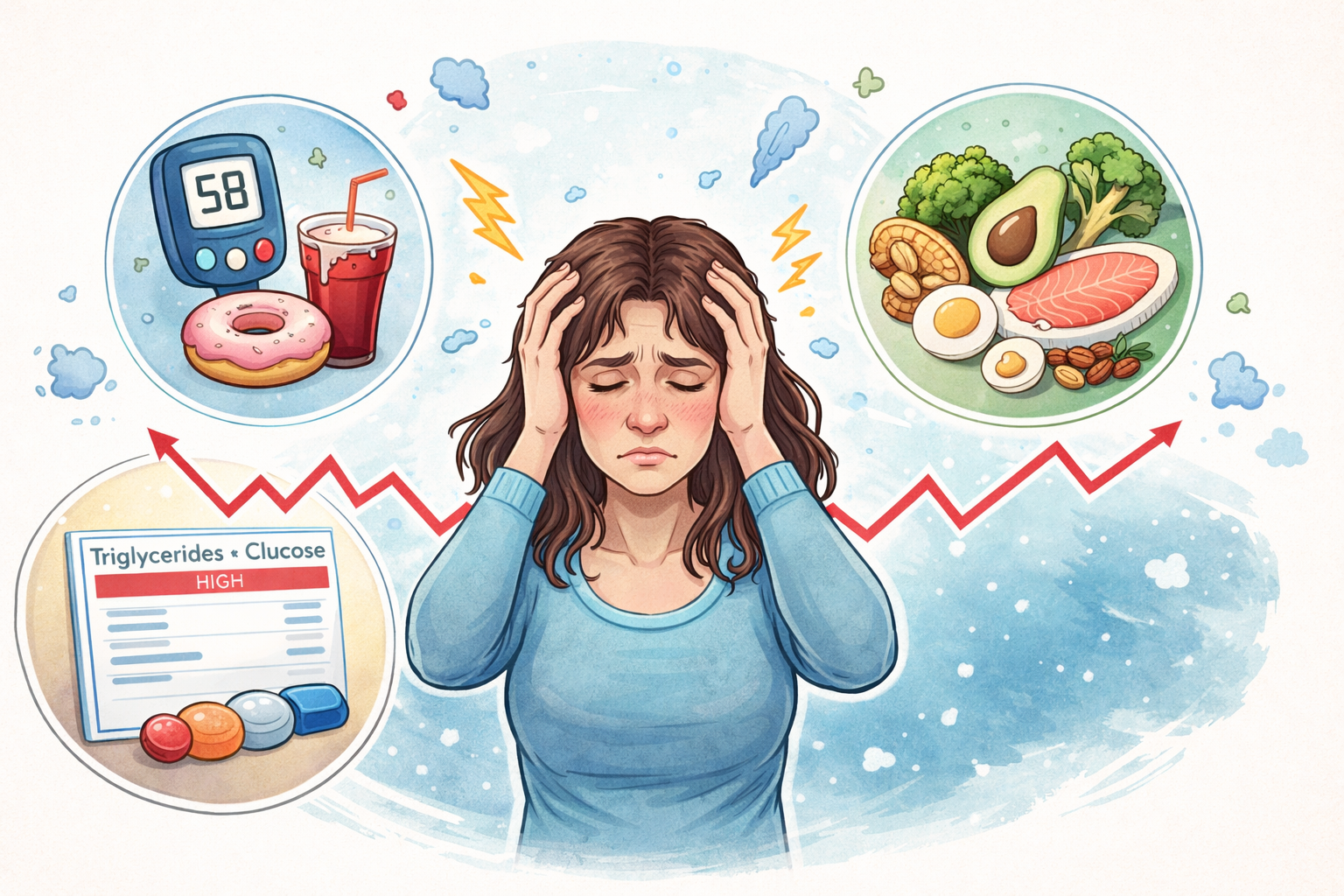
Anxiety is often approached as a primary psychiatric condition, but emerging data suggest that metabolic dysfunction may play a contributory role. Markers of insulin resistance, glycemic variability, and long-term glucose regulation appear to influence the risk of developing anxiety over time, even in individuals without diagnosed diabetes.
In a large UK Biobank cohort, higher levels of insulin resistance, reflected by the triglyceride-glucose (TyG) index and triglyceride to HDL ratio, were associated with an increased risk of incident anxiety, suggesting that early metabolic dysfunction may precede symptom onset. Similarly, longitudinal data show that greater visit-to-visit glucose variability is associated with a higher incidence of anxiety, highlighting the physiologic impact of repeated blood sugar fluctuations. Notably, this relationship appears to be bidirectional- individuals with diabetes have a higher risk of anxiety, and those with anxiety are more likely to develop metabolic disease over time.
Why this matters clinically
These findings support a broader model in which anxiety may, in some patients, reflect underlying neuroendocrine and metabolic dysregulation, including alterations in insulin signaling, inflammatory pathways, and stress hormone activation. This may be particularly relevant in patients presenting with overlapping features such as fatigue, cravings, postprandial symptoms, or cardiometabolic risk factors.
Clinical takeaway
In patients with anxiety, especially those with signs of metabolic dysfunction, it may be useful to assess both insulin resistance and glycemic variability. Foundational labs include fasting glucose, fasting insulin, hemoglobin A1c, triglycerides, HOMA-IR, and HDL, with additional tools such as continuous glucose monitoring (CGM) providing further insight when indicated. From a clinical management standpoint, interventions that improve insulin sensitivity and reduce blood sugar fluctuations, including prioritizing protein intake, minimizing refined carbohydrates, pairing macronutrients, and maintaining consistent meal timing, may help modulate physiologic stress responses. Addressing these metabolic drivers may represent a meaningful adjunctive strategy in select patients with anxiety.
References:
-
Ren H, Zhao T, Lv Z, Xie G, Sun H. Prospective association of the triglyceride-glucose index and triglyceride to high-density lipoprotein cholesterol ratio with anxiety risk in a community-based cohort: a UK Biobank study. BMJ Open. 2025;15:e103997. doi:10.1136/bmjopen-2025-103997
-
Kwon M, Lee M, Kim EH, Choi DW, Jung E, Kim KY, Jung I, Ha J. Risk of depression and anxiety disorders according to long-term glycemic variability. J Affect Disord. 2023;339:1-9. doi:10.1016/j.jad.2023.09.017
-
Mersha AG, Tollosa DN, Bagade T, Eftekhari P. A bidirectional relationship between diabetes mellitus and anxiety: A systematic review and meta-analysis. J Psychosom Res. 2022;156:110991. doi:10.1016/j.jpsychores.2022.110991
Check Out This Month's Podcast Episode
🎧 New Podcast Episode: Anxiety Through a Functional Medicine Lens
In this month’s episode of the FMP Essentials Show, Dr. Yousef Elyaman welcomes Everest Goldstein, M.Ed, MSN, APRN, PMHNP-BC, IFMCP for a conversation on anxiety through a functional medicine lens and why it deserves a more individualized, root-cause approach.
They explore how anxiety is often treated as a stand-alone diagnosis, when in many cases it may be a signal of deeper imbalances involving cortisol, blood sugar, thyroid function, nutrient status, gut health, mold exposure, trauma, and nervous system dysregulation. Everest also shares how she evaluates anxiety in practice, what patterns she commonly sees, and practical tools that may help support patients beyond a one-size-fits-all approach.
Here’s what they cover:
- Why anxiety exists on a spectrum and isn’t always “just in your head”
- How cortisol patterns can shape morning anxiety, nighttime anxiety, and sleep disruption
- The connection between blood sugar swings and anxious or panicky symptoms
- Why thyroid markers, nutrient deficiencies, and methylation issues may be relevant
- How mold and gut dysfunction can contribute to persistent anxiety symptoms
- Functional medicine tools and lifestyle strategies that may help support nervous system balance
If you’ve ever felt like anxiety is more than a mental health label and may reflect something deeper going on in the body, this episode offers a thoughtful, practical framework for looking at it more broadly.
Check Out This Month's Blog Post
5 Nutrient Deficiencies That May Contribute to Anxiety
This month’s blog explores how nutrient status may influence anxiety through its effects on neurotransmitter production, stress response, and overall brain function. We highlight key nutrients, including magnesium, B vitamins, amino acids, iron, and zinc, and review the research behind how low or suboptimal levels may contribute to symptoms such as anxiety, fatigue, and poor stress tolerance. This article also offers practical insights into when to consider evaluating nutrient status as part of a functional medicine approach.
Click here to view the article!
Help Us Grow Our Community!
Know a colleague who would benefit from being part of this Mastermind? Feel free to invite them to join us!
Thank you for being part of our community!
-The FMP Essentials Team


Responses