
In This Edition:
- What’s New at FMP Essentials: Stay updated on upcoming courses, practitioner meet-ups, exciting announcements, and new educational content.
-
- Private Mastermind Podcast Spotlight: This month’s episode features Dr. Lara Zakaria, exploring how wearables can provide real-time insight into metabolic health, stress, sleep, and recovery. Dr. Elyaman and Dr. Zakaria break down metabolic flexibility and how clinicians can use wearable data to better understand patient physiology and drive meaningful behavior change.
-
- Stay informed, engaged, and ahead of the curve with this month’s updates!
What's New At FMP Essentials?
- Public Podcast: This month’s public podcast features Dr. Kara Fitzgerald, a leader in functional medicine and epigenetics. In this episode of the FMP Essentials Show, Dr. Elyaman and Dr. Fitzgerald explore the difference between biological age and chronological age and how aging may be more modifiable than we once thought. They break down the science of epigenetics and how gene expression, inflammation, and lifestyle factors influence the aging process. The conversation highlights emerging research showing that targeted diet and lifestyle interventions can meaningfully improve biological age in a relatively short period of time. Dr. Fitzgerald shares practical insights on how to measure biological age, the role of inflammation markers like CRP, and why a whole-food, nutrient-dense approach paired with sleep, stress management, and exercise can support longevity at the cellular level. Available now on YouTube, Apple Podcasts, and Spotify. Subscribe on YouTube to stay updated with new episodes as they release. Click here to watch now.
Are Blood Sugar Responses More Personalized Than We Think?
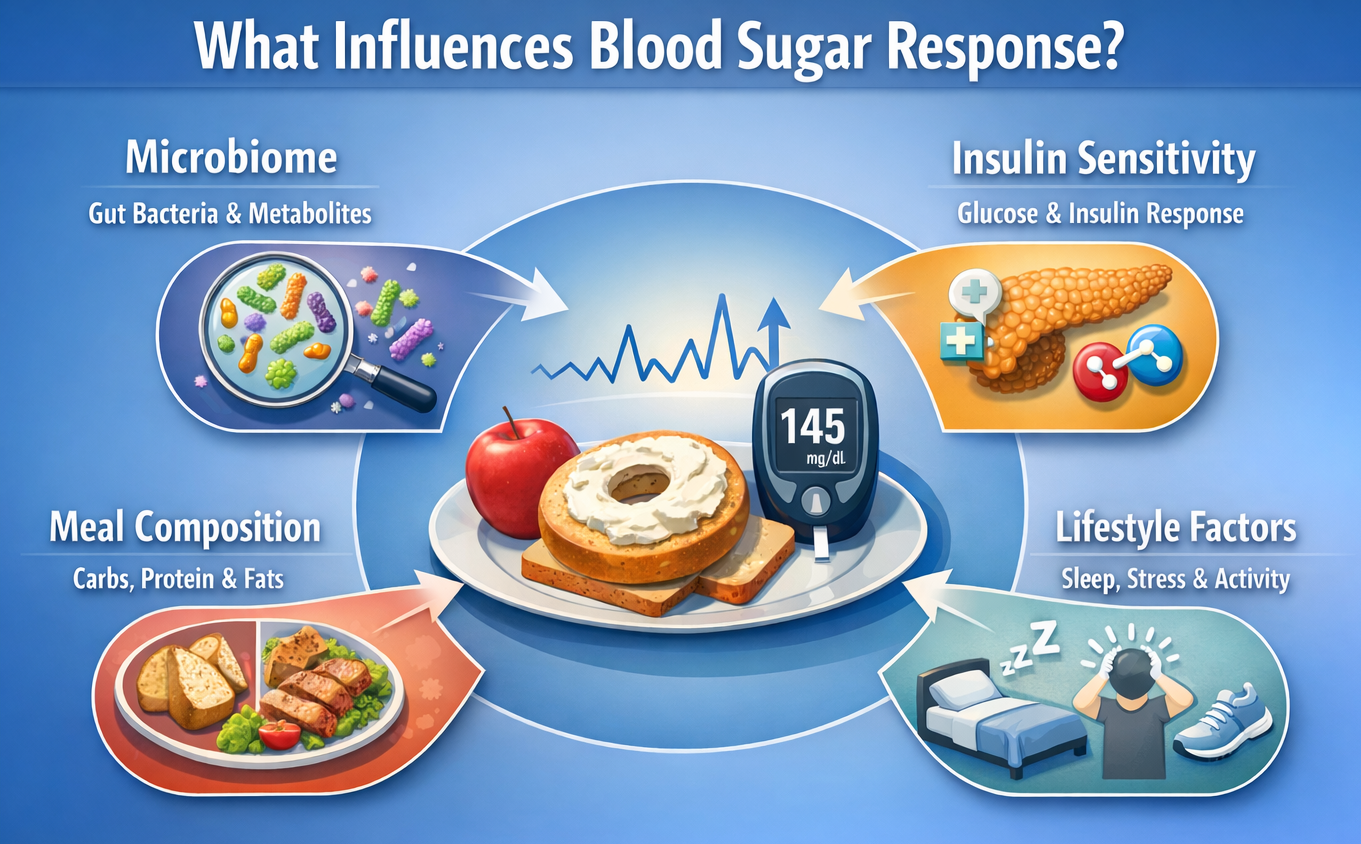
Blood sugar is often approached through a standardized lens, focused on calories, carbohydrates, or glycemic index. However, emerging data suggest that glycemic responses to food are far more individualized than previously understood.
In a cohort study using continuous glucose monitoring (CGM), researchers found that postprandial glucose responses to the same meals varied significantly between individuals, even in those without diabetes. Notably, a standardized meal produced a wide range of glucose excursions, highlighting that identical foods do not produce identical metabolic responses.
Importantly, traditional predictors such as calorie and carbohydrate content were less effective at predicting glucose responses compared to models that incorporated individual factors, including physiology and the gut microbiome. This suggests that current one-size-fits-all dietary recommendations may overlook meaningful interindividual variability.
Why this matters clinically
These findings support a more personalized approach to metabolic health. Patients with normal fasting glucose or A1c may still experience significant glycemic variability throughout the day, which may contribute to symptoms such as fatigue, cravings, and energy fluctuations, as well as long-term cardiometabolic risk.
Variability in glucose response appears to be influenced by multiple factors, including microbiome composition, insulin sensitivity, meal composition, and lifestyle inputs such as sleep and stress. As a result, identifying individual patterns may be more clinically useful than relying on generalized dietary rules.
Clinical takeaway
CGMs can provide valuable insight into real-time glycemic patterns and help identify patient-specific responses to food and lifestyle factors. Rather than focusing solely on reducing carbohydrates or calories, a more effective strategy may involve tailoring dietary and lifestyle interventions based on individual responses.
From a clinical standpoint, CGMs can help guide:
- Identification of personalized foods that raise blood sugar
- Optimization of macronutrient composition
- Adjustment of meal timing and frequency
- Integration of lifestyle factors that influence glucose regulation
This individualized approach may offer a more precise and effective path to improving metabolic health and preventing disease.
References:
Check Out This Month's Podcast Episode
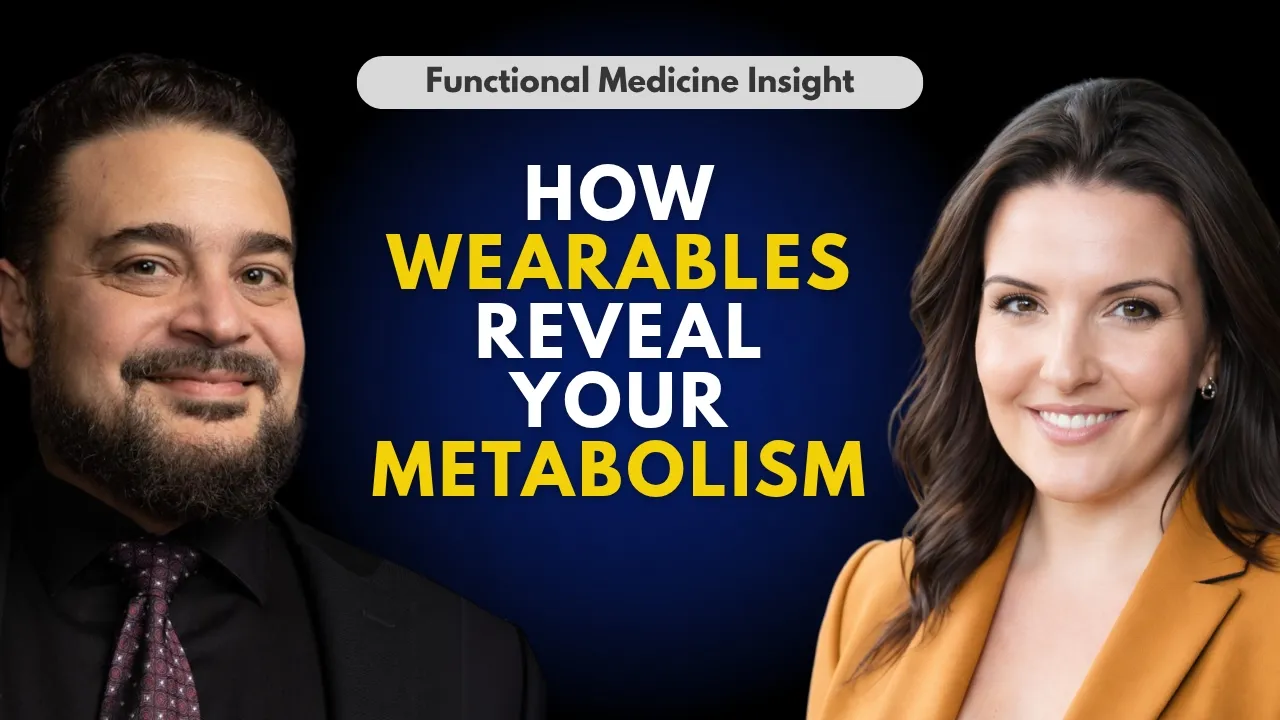
🎧 New Podcast Episode: Wearables & Metabolic Health
In this month’s episode of the FMP Essentials Show, Dr. Yousef Elyaman welcomes Dr. Lara Zakaria for a practical conversation on how wearable technology can offer deeper insight into metabolic health and day-to-day physiology.
They explore how tools like continuous glucose monitors, smart rings, and other wearables can move beyond basic tracking to help patients and practitioners better understand patterns in blood sugar, stress, sleep, and recovery. Dr. Zakaria also breaks down what metabolic health and metabolic flexibility really mean and why they are foundational to nearly every system in the body.
Here’s what they cover:
- What metabolic health actually reflects beyond blood sugar and cholesterol
- The concept of metabolic flexibility and how it shows up clinically
- How wearables like CGMs and sleep trackers provide real-time physiological data
- Why trends matter more than single data points when interpreting wearable data
- The connection between stress, inflammation, and metabolic dysfunction
- How clinicians can use wearable data to drive behavior change and patient engagement
If you’ve ever wondered how to meaningfully integrate wearables into clinical care or how to help patients connect their daily habits to real physiological changes this episode offers a clear, actionable framework.
How to watch/listen: Log into your account, select the Bronze Mastermind, and scroll down to the "Expert Interviews, Insights & Podcasts" section to find the episode.
Check Out This Month's Blog Post
Heart Rate Variability: What Wearables Can Tell Us About Stress and Recovery
This month’s blog explores heart rate variability (HRV) as a practical tool for understanding how the body responds to stress and recovery demands. We break down what HRV represents physiologically, how wearable devices can track it in real time, and why trends over time are more meaningful than single readings. The article also highlights how HRV can be used in clinical practice to identify patterns related to sleep, stress, illness, and lifestyle factors, offering a more dynamic view of patient health.
Click here to view the article!
Help Us Grow Our Community!
Know a colleague who would benefit from being part of this Mastermind? Feel free to invite them to join us!
Thank you for being part of our community!
-The FMP Essentials Team



Responses