
In This Edition:
- What’s New at FMP Essentials: Stay updated on upcoming courses, practitioner meet-ups, exciting announcements, and new educational content.
-
- Private Mastermind Podcast Spotlight: This month’s Private Mastermind episode features Dr. Kara Fitzgerald on the science of biological aging and epigenetics. Dr. Elyaman and Dr. Fitzgerald explore how diet and lifestyle influence gene expression, why biological age is modifiable, and how a functional medicine approach can slow aging by addressing inflammation, nutrition, and core lifestyle drivers.
- Blog Feature: This month’s blog introduces inflammaging—chronic, low-grade inflammation that accelerates biological aging—and why it matters for long-term health and disease risk.
- Stay informed, engaged, and ahead of the curve with this month’s updates!
What's New At FMP Essentials?
- Public Podcast: Our public podcast episode released this month features Dr. Elyaman in a candid, high-impact conversation with Adam Lamb, healthcare entrepreneur, executive coach, and founder of The One Percent Doctor, on the hidden crisis of clinician burnout. Together, they explore why burnout so often develops silently in high-performing clinicians, how broken systems and financial stress amplify exhaustion, and why resilience alone is never the solution. This episode moves beyond surface level work life balance advice to focus on structure, clarity, boundaries, and purpose as the true foundations of sustainable practice and personal fulfillment. Available now on YouTube, Apple Podcasts, and Spotify. Subscribe on YouTube to stay updated with new episodes as they release. Click here to watch now.
Diet and Lifestyle Interventions to Slow Biological Aging
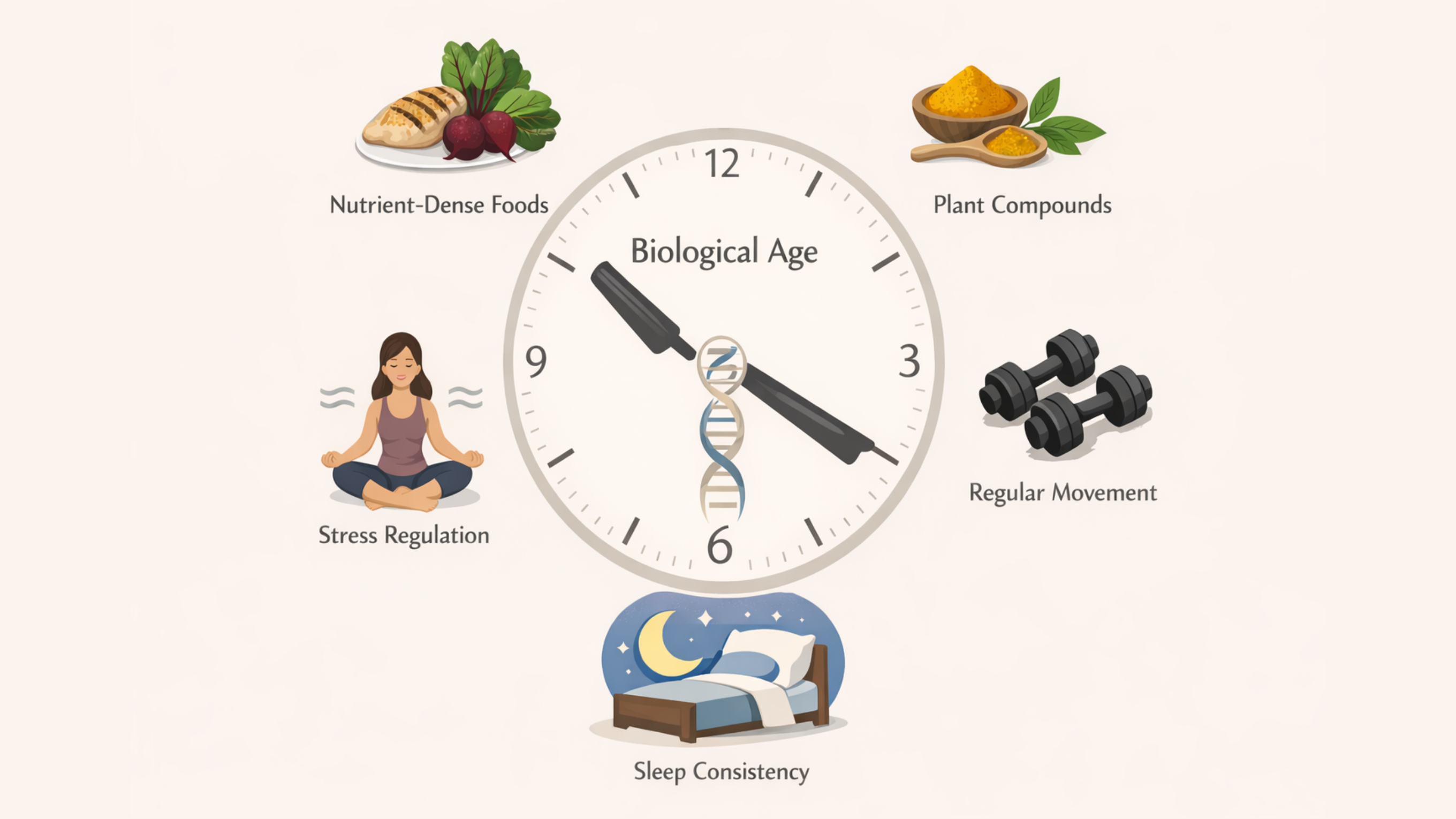
This month’s podcast features Dr. Kara Fitzgerald, so we thought it was a great opportunity to highlight one of her most influential studies on biological aging and lifestyle medicine.
What the study examined
The study followed healthy men ages 50 to 72 over an eight week period. Participants in the intervention group received structured guidance on diet, sleep, exercise, stress management, and coaching support. The control group made no changes. Biological age was assessed using a DNA methylation clock derived from saliva samples.
What the intervention included
The program emphasized a plant centered, nutrient dense dietary pattern rich in vegetables, leafy greens, beets, herbs, and polyphenol rich foods, alongside modest amounts of high quality animal protein. Lifestyle guidance included regular moderate intensity exercise, consistent sleep targets, daily stress reduction practices, and limited overnight eating. A probiotic and a phytonutrient rich fruit and vegetable powder were included, while high dose methyl donor supplements were intentionally avoided.
Key findings
Participants in the intervention group showed an average reduction in biological age of nearly two years compared to their own baseline and just over three years compared to controls. Improvements were also seen in metabolic markers, including a reduction in triglycerides and an increase in circulating folate levels achieved through food and microbiome support rather than supplementation.
Why this matters clinically
This was the first randomized controlled trial to suggest that a combined diet and lifestyle approach may reverse measures of epigenetic aging in otherwise healthy adults. While larger and more diverse studies are still needed, these findings reinforce the role of lifestyle-based care. Addressing nutrition, movement, sleep, stress, and providing consistent coaching can meaningfully influence biological processes linked to aging and long term disease risk.
Clinical takeaway
Rather than targeting aging through a single supplement or medication, this study highlights the power of food and lifestyle changes. Small, structured changes applied consistently may meaningfully shift biological aging trajectories and support healthier aging over time.
References:
-
Fitzgerald KN, Hodges R, Hanes D, et al. Potential reversal of epigenetic age using a diet and lifestyle intervention: a pilot randomized clinical trial. Aging (Albany NY). 2021;13(7):9419-9432. doi:10.18632/aging.202913
Check Out This Month's Podcast Episode
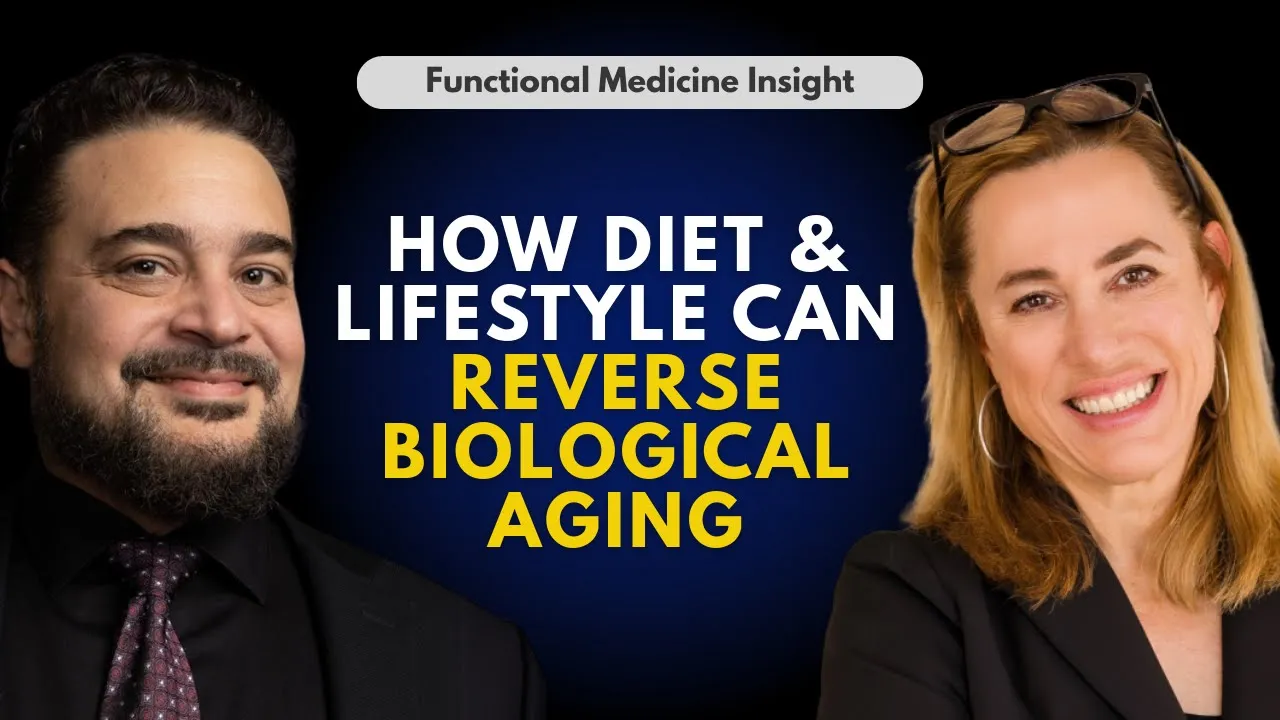
🎧 New Podcast Episode: How Diet & Lifestyle Can Reverse Biological Aging
Check Out This Month's Blog Post
Understanding Inflammaging: How Inflammation Contributes to Aging
This month’s blog breaks down the concept of inflammaging—the chronic, low-grade inflammation that develops with age. We explore what drives this process, how it contributes to biological aging and chronic disease, and why lifestyle factors play a central role in supporting healthy aging.
Click here to view the article!
Help Us Grow Our Community!
Know a colleague who would benefit from being part of this Mastermind? Feel free to invite them to join us!
Thank you for being part of our community!
-The FMP Essentials Team


Responses