
In This Edition:
- What’s New at FMP Essentials: Stay updated on upcoming courses, practitioner meet-ups, exciting announcements, and new educational content.
-
- Private Mastermind Podcast Spotlight: This month’s Private Mastermind episode features Natalie Lue, relationship and boundaries expert and author of The Joy of Saying No. Dr. Elyaman and Natalie explore how people pleasing develops as a survival response, why chronic yeses fuel burnout and stress, and how learning to say no supports healthier relationships, work boundaries, and overall wellbeing.
- Blog Feature: This month’s blog explores how beliefs and social experience influence gene expression, highlighting the role of stress-responsive pathways in health, aging, and resilience.
- Stay informed, engaged, and ahead of the curve with this month’s updates!
What's New At FMP Essentials?
- Public Podcast: This month’s public podcast features Dr. Tara Scott, a board-certified OB/GYN and leading expert in perimenopause and progesterone therapy. Together, Dr. Elyaman and Dr. Scott explore why perimenopause is so often missed or dismissed, even when labs appear “normal”, and how shifts in progesterone, estrogen, cortisol, and the gut–hormone axis can drive symptoms like insomnia, anxiety, weight gain, mood changes, and insulin resistance years before menopause. The episode goes beyond symptom management to clarify hormone testing, interpretation, and when progesterone helps through a functional medicine lens. Available now on YouTube, Apple Podcasts, and Spotify. Subscribe on YouTube to stay updated with new episodes as they release. Click here to watch now.
Self-Silencing and Cardiovascular Risk in Midlife Women

In a 2022 observational study, researchers examined whether self-silencing, defined as inhibiting one’s thoughts, feelings, or needs to avoid conflict or loss in intimate relationships, was associated with subclinical atherosclerosis in midlife women. Rather than relying on self-reported health outcomes, the study used carotid artery ultrasound to directly assess vascular health.
What the study examined
The study included 290 nonsmoking women ages 40–60 without known cardiovascular disease. Participants completed a validated self-silencing questionnaire and underwent blood testing and carotid ultrasound to assess carotid plaque and intima–media thickness (IMT), both established predictors of future cardiovascular events.
Key findings
Nearly half of the participants had detectable carotid plaque. Higher self-silencing scores were associated with greater odds of more advanced carotid plaque after adjustment for traditional cardiovascular risk factors, depression, physical activity, and diet. This association was observed primarily among non-white women, with no significant relationship detected in white women. Self-silencing was related to plaque burden, a direct marker of atherosclerosis, rather than IMT.
Why this matters clinically
This study is among the first to examine a relationship-based behavioral pattern in relation to objective vascular imaging in women. The findings suggest that chronic emotional suppression within intimate relationships may be associated with subclinical atherosclerosis in certain populations, independent of standard cardiovascular risk factors. While causal conclusions cannot be drawn, the results highlight a potential psychosocial contributor to cardiovascular risk that is not captured by traditional biomarkers alone.
Clinical takeaway
In midlife women, particularly those experiencing chronic relational stress, cardiovascular risk assessment may benefit from a broader lens that considers psychosocial stress patterns alongside conventional risk factors. Supporting emotional expression and addressing sustained relational stress may be a relevant adjunct to preventive cardiovascular care.
References:
-
Jakubowski KP, Barinas-Mitchell E, Chang YF, Maki PM, Matthews KA, Thurston RC. The Cardiovascular Cost of Silence: Relationships Between Self-silencing and Carotid Atherosclerosis in Midlife Women. Ann Behav Med. 2022;56(3):282-290. doi:10.1093/abm/kaab046
Check Out This Month's Podcast Episode
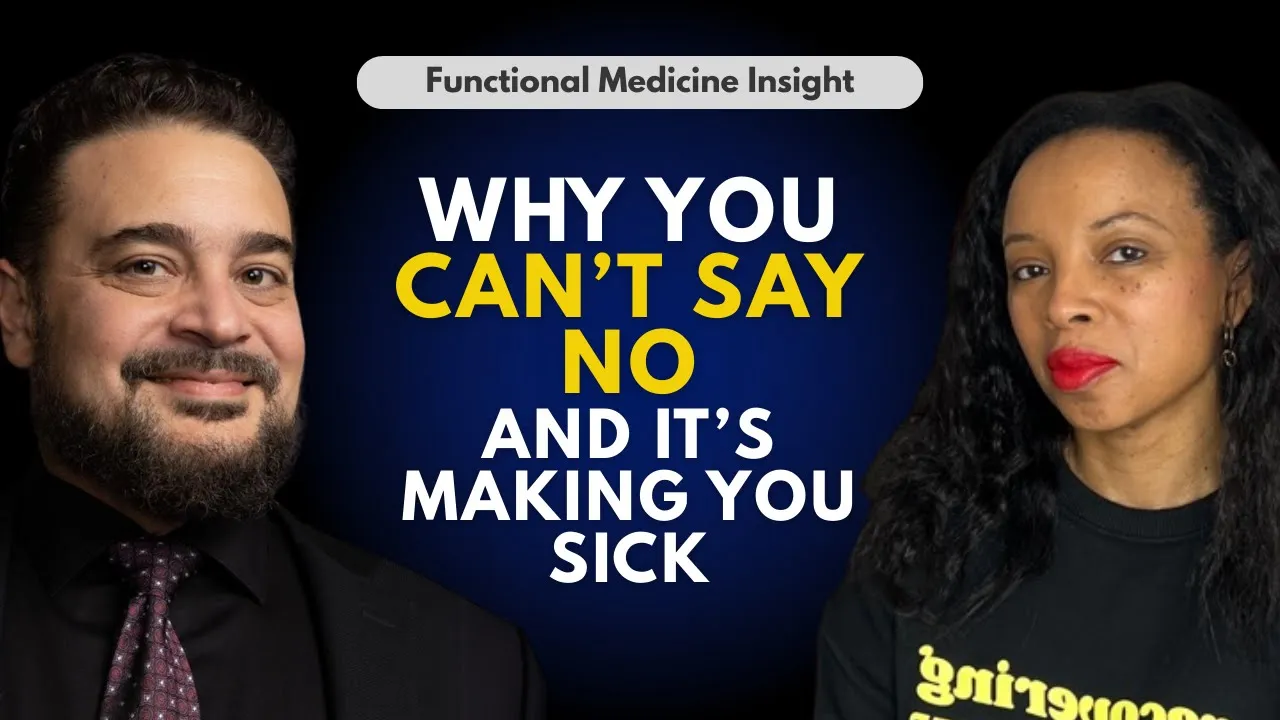
🎧 New Podcast Episode: Why Saying No Is So Hard & Why It Matters
In this month’s episode of the FMP Essentials Show, Dr. Yousef Elyaman welcomes Natalie Lue (relationship and boundaries expert, author of The Joy of Saying No, and creator of Baggage Reclaim) for a conversation on why people pleasing isn’t just a “personality trait,” but a learned survival pattern that can quietly drive burnout, resentment, chronic stress, and strained relationships.
They explore how early conditioning around obedience and approval can disconnect us from our needs, how “yes” often turns into anxiety or resentment when it isn’t authentic, and why the ability to say no is deeply tied to self-esteem, intimacy, and long-term wellbeing. Natalie also shares practical, doable starting points like noticing where your “people pleaser feelings” show up, identifying patterns at work and in relationships, and experimenting with more honest, embodied ways to say no without over-explaining.
Here’s what they cover:
- Why people pleasing develops and how it becomes a default “survival response” in adulthood
- How chronic yeses can fuel burnout, anxiety, resentment, and lost identity
- Boundaries, stress physiology, and why work culture often rewards people pleasers (then burns them out)
- Why a relationship where you can’t say no isn’t a healthy relationship
- Simple first steps: tracking your yes/no patterns, spotting triggers, and practicing cleaner no’s
- The five “people pleasing styles” Natalie sees most often
If you feel overwhelmed, drained, or stuck in cycles of over-giving, this episode offers a clear framework for what’s really happening and how to start shifting it.
Check Out This Month's Blog Post
How Beliefs and Social Experience Shape Gene Expression
This month’s blog explores how social experiences and subjective perceptions influence gene expression through stress-responsive biological pathways. We break down the science of human social genomics, review key research findings, and discuss why factors like loneliness, beliefs about aging, and structured therapies such as mindfulness and CBT matter for health and resilience.
Click here to view the article!
Help Us Grow Our Community!
Know a colleague who would benefit from being part of this Mastermind? Feel free to invite them to join us!
Thank you for being part of our community!
-The FMP Essentials Team


Responses