
In This Edition:
- What’s New at FMP Essentials: Stay updated on upcoming courses, practitioner meet-ups, and exciting announcements, and new educational content.
- Low DHEA and Autoimmune Conditions: Explore the link between low DHEA and autoimmunity, how to test for deficiencies, and potential benefits of supplementation.
- Private Mastermind Podcast Spotlight: Tune in to our latest episode on the Functional Medicine approach to Lyme Disease with Tom Sult, MD.
- Blog Feature: This month’s blog explores four key brain regions affected by stress and how functional medicine can support recovery through neuroplasticity strategies, targeted nutrients, and hyperbaric oxygen therapy (HBOT).
Stay informed, engaged, and ahead of the curve with this month’s updates!
What's New At FMP Essentials?
- Dr. Remina Panjwani Show: Dr. Elyaman joined Dr. Remina for an in-depth discussion on thyroid health, functional medicine, and the crucial role of comprehensive testing. Watch the full episode on YouTube to learn how stress, nutrients, and overlooked lab markers impact thyroid function!
- IFM's AFMCP Europe Program: Dr. Elyaman is looking forward to serving as an instructor for IFM's Applying Functional Medicine in Clinical Practice (AFMCP) Europe program, taking place in London on April 4-5. We will be hosting a meet up on Friday, April 4th—please fill out this form if you are interested in attending!
- Xymogen Xperience: Save the date for April 12–13, at the JW Marriott Dallas Arts District in Dallas, TX! Dr. Elyaman will be speaking on the functional medicine approach to dementia in his talk, "Cracking the Dementia Code: Functional Medicine Strategies for Cognitive Health and Resilience." Click here to buy tickets.
- Attendees will gain insights into:
- ✅ Key biomarkers and clinical assessments for cognitive function.
- ✅ The role of inflammation, mitochondrial health, and metabolic balance in brain aging.
- ✅ Nutrition, lifestyle, and targeted interventions to support cognitive wellness.
- ✅ Practical, actionable strategies to integrate into clinical practice.
- We're also excited to have our first FMP Essentials booth at the event—we hope to see you there!
- We are also excited to host a meet up. Please fill out this form if you are interested in attending.
- Attendees will gain insights into:
- A4M Spring Congress: We are hosting a meetup at the A4M Spring Congress that is taking place April 24-26. If you are attending the conference and would like to connect with fellow functional medicine practitioners, we'd love to meet you in person. Please fill out this form if you are interested in joining the meetup.
- Dr. Terry Wahls' Multiple Sclerosis and Autoimmune Summit: Dr. Elyaman will join Dr. Wahls and 40+ world-leading experts at her upcoming summit, running April 29 – May 5. Learn more about the event by clicking here.
-
New MASLD Research Update: We’ve just added a new research update to the MASLD course! Dr. Elyaman reviews a recent study on air pollution’s impact on MASLD and discusses strategies for addressing exposure in patients. If you're not enrolled, consider joining to stay up to date with the latest insights!
-
Mastermind: We continue to work on our Silver and Gold memberships which are set to launch in mid-2025, offering advanced clinical content and leadership development tools. Click here to join the waitlist!
Low DHEA and Autoimmune Conditions

What is DHEA?
Dehydroepiandrosterone (DHEA) is an adrenal steroid hormone that serves as a precursor to both androgens and estrogens. It is one of the most abundant circulating hormones in young adults, peaking around ages 20–30, and then declining steadily with age. By the time a person reaches 70–80 years old, DHEA levels may be only 10–20% of youthful levels. DHEA (mostly in its sulfate form, DHEA-S) also plays a role in immune function, helping to balance the effects of cortisol and modulate inflammation.
DHEA and Autoimmunity Connection
Low DHEA levels are frequently observed in patients with chronic inflammatory and autoimmune diseases. Conditions like systemic lupus erythematosus (SLE), rheumatoid arthritis (RA), and inflammatory bowel disease (IBD) often show decreased DHEA or DHEA-S levels. Research suggests that DHEA has immunoregulatory properties that help dampen prolonged inflammation and maintain self-tolerance. Given that autoimmune conditions disproportionately affect women—who naturally have lower DHEA levels—this hormone may be an important factor in immune balance.
Assessing DHEA Levels and Optimal Ranges
DHEA status is typically assessed via a blood test for DHEA-S. Normal ranges vary by age and sex, but generally:
- Women (18–39 years): 40–320 µg/dL
- Men (18–39 years): 110–510 µg/dL
Levels decline with age, and some practitioners aim for the upper half of the age-adjusted range or youthful levels when optimizing for immune health. Salivary or urinary hormone panels may provide additional insights into adrenal function.
Potential Benefits of DHEA Supplementation in Autoimmunity
DHEA supplementation may offer benefits in autoimmune conditions where levels are low:
- Lupus (SLE): Studies show that 50–200 mg of DHEA daily can reduce disease activity, help stabilize steroid requirements, and improve bone mineral density and fatigue.
- Adrenal Insufficiency: Low-dose DHEA (25–50 mg/day in women) can improve mood, energy, and sexual health.
- Other Autoimmune Diseases: While trials in RA and Sjögren’s have been inconclusive, some patients report subjective improvements in fatigue and well-being when DHEA levels are corrected.
Safety Considerations and Side Effects
DHEA is a hormone precursor, so supplementation should be used with caution. Potential side effects include:
- Androgenic effects: Acne, oily skin, hirsutism, scalp hair thinning (in women).
- Hormonal/metabolic effects: Possible effects on thyroid, insulin, and HDL cholesterol.
- Mood/neurologic effects: Insomnia, irritability, mood swings.
Precautions:
- DHEA should be avoided in hormone-sensitive cancers (breast, ovarian, prostate) unless supervised.
- Regular monitoring of DHEA-S, testosterone, and estrogen levels is recommended.
- Though available over the counter in the U.S., DHEA should be used under healthcare supervision.
When appropriately dosed and monitored, DHEA can be a valuable adjunct therapy for select autoimmune patients with confirmed deficiencies.
References:
- van Vollenhoven RF, Morabito LM, Engleman EG, McGuire JL. Treatment of systemic lupus erythematosus with dehydroepiandrosterone: a randomized, controlled trial. Ann Intern Med. 1999;130(7):549-556.
- Straub RH, Cutolo M, Zietz B, Scholmerich J. The role of adrenal androgens in hyperinflammatory immune responses in humans. Arthritis Rheum. 2001;44(4):394-407.
- Arlt W, Callies F, van Vlijmen JC, et al. Dehydroepiandrosterone replacement in women with adrenal insufficiency. N Engl J Med. 1999;341(14):1013-1020.
- Nestler JE, Barlascini CO, Clore JN, Blackard WG. Dehydroepiandrosterone administration decreases serum low-density lipoprotein levels and body fat. J Clin Endocrinol Metab. 1988;66(1):57-61.
- Casson PR, Andersen RN, Herrod HG, et al. Oral dehydroepiandrosterone in physiologic doses modulates immune function in postmenopausal women. Am J Obstet Gynecol. 1993;169(6):1536-1539.
- Cutolo M, Seriolo B, Villaggio B, et al. Androgens and rheumatoid arthritis. Rheum Dis Clin North Am. 2000;26(4):881-895.
- Gurnell EM, Hunt PJ, Curran SE, et al. Long-term DHEA replacement in Addison’s disease: randomized, placebo-controlled trial. J Clin Endocrinol Metab. 2008;93(12):4653-4660.
Check Out This Month's Podcast Episode
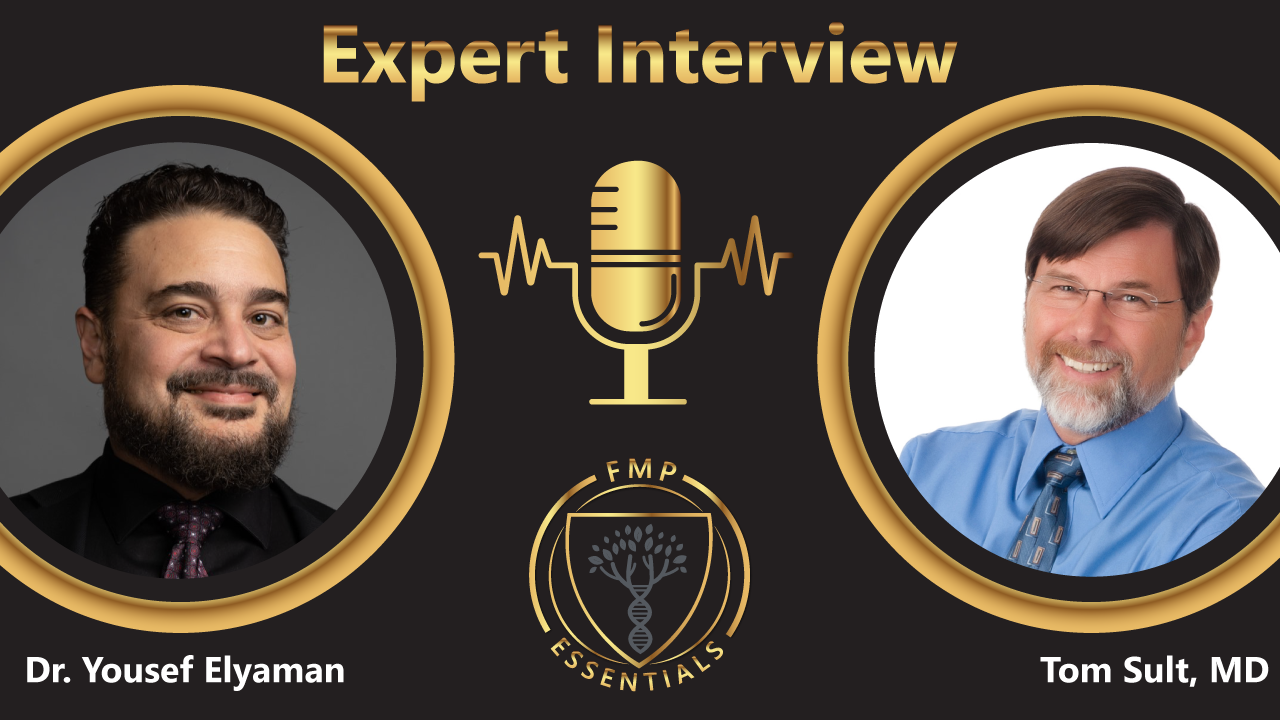
🎧 New Podcast Episode: The Functional Medicine Approach to Lyme Disease
This month on the FMP Essentials Show, Dr. Elyaman sits down with Dr. Tom Sult, a leading functional medicine physician and IFM faculty member, to dive deep into Lyme disease—from misdiagnosis to treatment strategies.
Here’s a glimpse of what they discuss:
- Dr. Sult’s Journey – From dyslexia and medical school challenges to becoming an expert in functional medicine.
- Understanding Lyme – Why Lyme disease is often underdiagnosed and how conventional testing misses many cases.
- Acute vs. Chronic Lyme – Key symptoms, overlooked warning signs, and why some patients develop long-term complications.
- Advanced Testing & Diagnosis – How standard labs fall short and the cutting-edge tests that provide a clearer picture.
- Functional Medicine Treatment – The role of nutrition, detoxification, herbal antimicrobials, and nitric oxide in healing from chronic Lyme.
This episode is packed with clinical pearls for practitioners looking to navigate the complexities of Lyme disease. 🎙️ Don’t miss it!
How to watch/listen: Log into your account, select the Bronze Mastermind, and scroll down to the "Expert Interviews, Insights & Podcasts" section to find the episode.
Check Out This Month's Blog Post
The Brain on Trauma: How Chronic Stress Reshapes Neural Pathways
Psychological trauma and chronic stress don’t just affect emotions—they physically alter brain structure and function. This month’s blog explores four key brain regions impacted by trauma—the amygdala, prefrontal cortex, hippocampus, and cerebellum—and how functional medicine can support recovery. Learn about targeted interventions like neuroplasticity strategies, key nutrients, nervous system therapies, and the emerging role of hyperbaric oxygen therapy (HBOT) in trauma healing.
Click here to view the article!
Help Us Grow Our Community!
Know a colleague who would benefit from being part of this Mastermind? Feel free to invite them to join us!
Thank you for being part of our community!
-The FMP Essentials Team


Responses