
Heart Rate Variability: What Wearables Can Tell Us About Stress and Recovery
Apr 20, 2026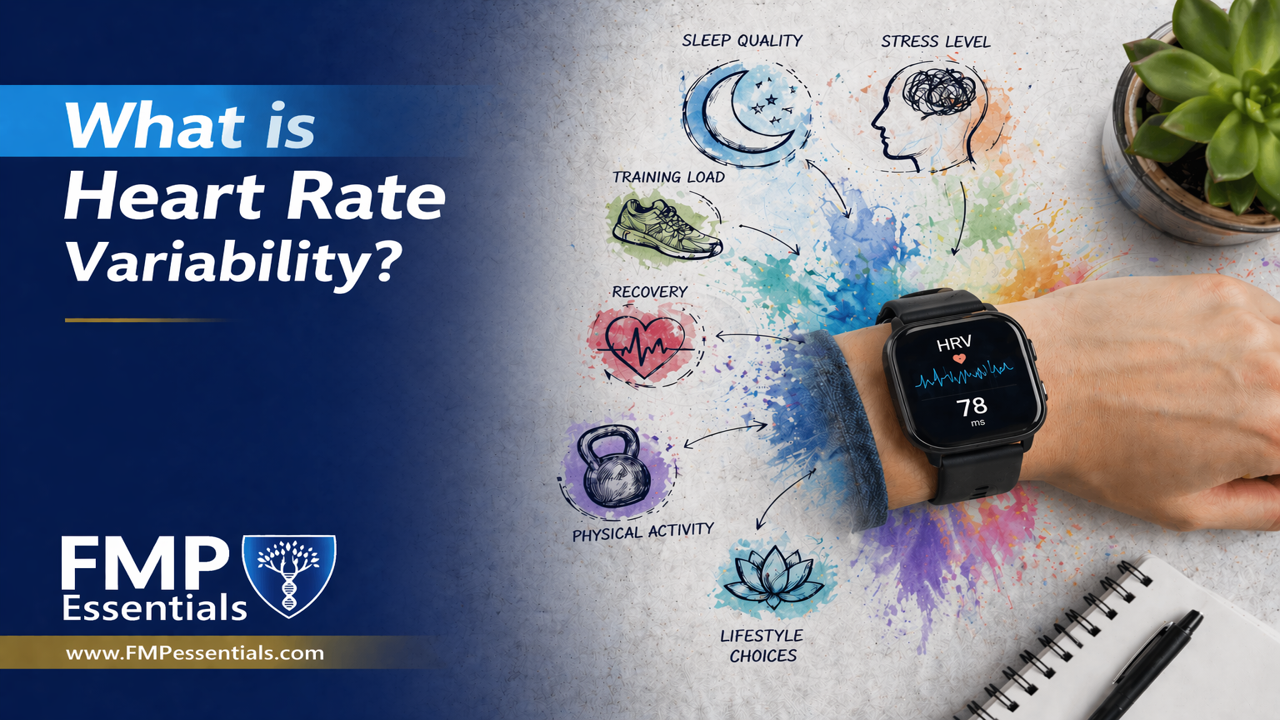
Heart rate variability (HRV) refers to the variation in time between each heartbeat. Rather than beating at a perfectly steady rhythm, a healthy heart constantly adjusts the timing between beats in response to internal and external demands.
HRV reflects autonomic nervous system activity, which regulates the body’s stress and recovery responses. The sympathetic nervous system prepares the body for action by increasing heart rate and blood pressure, while the parasympathetic nervous system supports recovery by slowing the heart rate and promoting relaxation. The balance between these systems is reflected in HRV.
In general, higher HRV is associated with greater adaptability and resilience, indicating that the body can respond effectively to stressors and return to baseline. Lower HRV may reflect reduced adaptability and a diminished ability to recover from physiologic or psychological stress.
While HRV values vary widely between individuals, tracking HRV over time can provide insight into how well the body is responding to daily demands.
Why HRV Matters
HRV is increasingly recognized as a useful marker of overall health because it reflects how well the body adapts to stress. HRV reflects autonomic nervous system regulation, which plays a central role in coordinating the body’s response to internal and external stressors.
Lower HRV has been associated with a range of conditions, including chronic stress, cardiovascular disease, diabetes, and systemic inflammation.
Importantly, HRV is sensitive to both acute and chronic influences. Factors such as poor sleep, psychological stress, illness, alcohol intake, and overtraining can all lead to short-term reductions in HRV, while persistent low HRV may reflect a longer-term imbalance in autonomic regulation.
For this reason, HRV is less about diagnosing a specific condition and more about understanding how well the body is coping with its current load. In clinical practice, it can provide additional context when evaluating patients with symptoms such as fatigue, poor stress tolerance, or difficulty recovering from illness or exercise.
Wearables and HRV
Historically, heart rate variability was measured in clinical settings using short-term recordings such as electrocardiograms. While accurate, these measurements provide only a snapshot in time and may miss how HRV changes in response to daily life.
Wearable devices have made HRV more accessible by allowing repeated measurements in real-world settings, including during sleep, rest, and recovery. These include wrist-worn devices, finger-worn rings, and chest-based sensors, most of which estimate HRV using non-invasive methods that track changes in blood flow with each heartbeat. Although these measurements are not identical to clinical ECG, they are generally reliable for tracking patterns over time.
The key advantage of wearables is the ability to monitor HRV longitudinally. Instead of relying on a single value, clinicians and patients can observe how HRV changes in response to common stressors such as sleep disruption, training, alcohol intake, or illness. Large-scale data show that HRV consistently decreases in response to these stressors, reflecting increased physiologic strain.
This shift from single measurements to continuous tracking provides a more practical way to understand how the body is responding to everyday demands.
How to Interpret HRV
HRV varies widely between individuals, with factors such as age and sex accounting for a significant portion of this variability. Because of this, there are no universally accepted “normal” ranges for HRV in clinical practice.
In general, higher HRV reflects greater parasympathetic activity and recovery, while lower HRV may indicate increased physiologic stress. However, absolute values are less meaningful than changes over time.
A practical approach is to assess trends:
- Higher than baseline → improved recovery
- Stable → consistent physiologic state
- Lower than baseline → increased stress, illness, or recovery demand
HRV is highly responsive to factors such as sleep, training, alcohol intake, and illness, often changing in response to these stressors in real time.
Clinical Use of HRV
HRV can be a useful tool in clinical practice for tracking how patients respond to daily stressors and lifestyle changes over time. Because it reflects autonomic nervous system regulation, it provides a real-time view of physiologic stress and recovery.
In practice, HRV is most valuable for identifying patterns. Changes in HRV may help highlight the impact of factors such as sleep quality, illness, training load, alcohol intake, and psychological stress.
HRV can also be used to monitor response to interventions. Improvements in sleep, stress management, and other lifestyle changes are often reflected in more stable HRV patterns over time.
While wearable-derived HRV is useful, it has important limitations. Measurements vary across devices and are influenced by factors such as sensor accuracy, motion, and recording conditions. Most consumer devices rely on non-invasive methods that are less precise than clinical ECG, particularly during activity.
Importantly, HRV should be used as an adjunctive tool. It is most helpful when interpreted alongside clinical history, symptoms, and other objective data, helping to support more individualized and responsive care.
Clinical Takeaways
HRV provides a practical way to assess physiologic stress and recovery over time. Because values vary between individuals, trends are more meaningful than single readings.
In clinical practice, HRV can be used to:
- monitor patterns of stress, recovery, and lifestyle impact
- support behavior change through objective feedback
- provide additional context alongside symptoms and clinical data
When used appropriately, HRV can help guide more individualized and responsive care.
Director of Education at FMP Essentials
References
- Li K, Cardoso C, Moctezuma-Ramirez A, et al. Heart rate variability measurement through a smart wearable device: another breakthrough for personal health monitoring? Sensors (Basel). 2023;23(24):10388. doi:10.3390/s232410388
- Petek BJ, Al-Alusi MA, Moulson N, et al. Consumer wearable health and fitness technology in cardiovascular medicine: JACC state-of-the-art review. J Am Coll Cardiol. 2023;82(2):123-142. doi:10.1016/j.jacc.2023.05.028
- Altini M, Plews D. What is behind changes in resting heart rate and heart rate variability? A large-scale analysis of longitudinal measurements acquired in free-living. Sensors (Basel). 2021;21(23):7932. doi:10.3390/s21237932
- Tegegne BS, Man T, van Roon AM, et al. Determinants of heart rate variability in the general population: the Lifelines Cohort Study. Heart Rhythm. 2018;15(10):1552-1558. doi:10.1016/j.hrthm.2018.05.006
- Esco MR, Fields AD, Mohammadnabi MA, Kliszczewicz BM. Monitoring training adaptation and recovery status in athletes using heart rate variability via mobile devices: a narrative review. Sensors (Basel). 2026;26(1):3. doi:10.3390/s26010003
About the FMP Essentials Mastermind
The FMP Essentials Mastermind is a clinical mentorship community for practicing physicians, NPs, and PAs applying functional medicine to real cases. Members join Dr. Yousef Elyaman, MD, IFMCP, for monthly live clinical deep dives, case-based learning, and a peer community of working clinicians. Learn more about the FMP Essentials Mastermind.
Author

