
Beyond “Drink More Water”: A Functional Medicine Approach to Preventing Recurrent Kidney Stones
Jul 10, 2026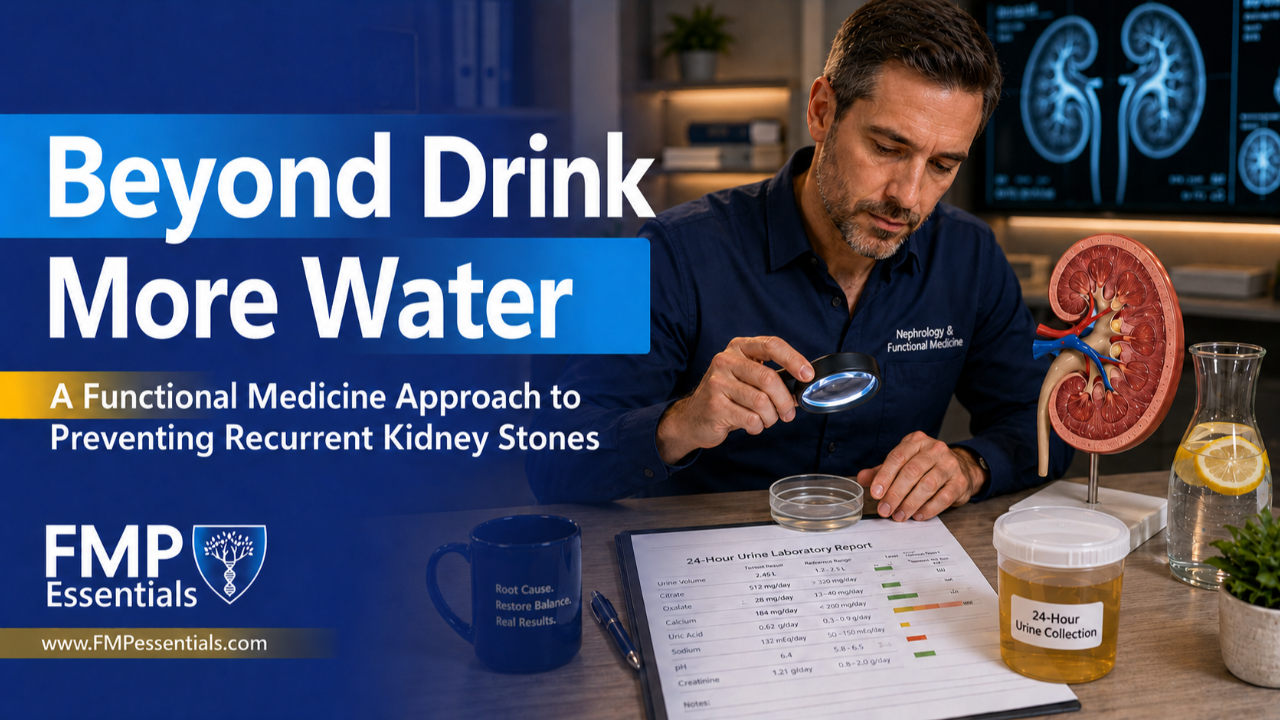
Kidney stones are often treated as isolated events: manage the pain, remove or pass the stone, and encourage the patient to drink more water.
Hydration is important, but it does not explain why the stone formed or why it may return.
In this month’s episode of the FMP Essentials Show, Dr. Yousef Elyaman and nephrologist Dr. Majd Isreb discuss a systems-based approach to prevention. Rather than applying the same recommendations to every patient, Dr. Isreb focuses on identifying the urinary, dietary, gastrointestinal, metabolic, and genetic factors that may be creating an environment where stones can form.
Start With a More Complete Evaluation
Whenever possible, a passed or removed stone should be collected and analyzed. Calcium oxalate stones are the most common, but calcium phosphate, uric acid, struvite, and cystine stones may point toward different contributing factors.
Dr. Isreb also emphasizes comprehensive 24-hour urine testing after the acute stone episode has resolved. This can include:
- Total urine volume
- Urine pH
- Calcium
- Oxalate
- Citrate
- Sodium
- Potassium
- Magnesium
- Phosphate
- Uric acid
- Sulfate
- Creatinine
Creatinine can help determine whether the collection was reasonably complete. The remaining markers provide a more individualized picture of the patient’s stone-forming environment.
Let the Urine Guide the Plan
A 24-hour urine collection can help practitioners move beyond generic recommendations.
Low urine volume may show that the patient is not producing enough urine to sufficiently dilute stone-forming substances. Elevated sodium may suggest a dietary pattern that is increasing urinary calcium. Sulfate and estimated protein catabolic rate may provide insight into animal protein intake, while urine pH can help identify conditions favoring specific stone types.
This reflects a central principle of functional medicine: the same diagnosis does not always have the same underlying driver.
Two patients may both form calcium-containing stones, but one may have low urinary citrate, another may have elevated urinary calcium, and another may have an underlying endocrine or metabolic contributor. Their prevention plans should not necessarily look the same.
Look for Missing Protective Factors
Stone prevention is not only about reducing substances that contribute to crystallization. It is also about identifying protective factors that may be too low.
Citrate binds calcium in the urine, helping keep it soluble and limiting crystal formation. When urinary citrate is low, Dr. Isreb discusses increasing citrate-containing foods, such as lemon and lime, when appropriate. Potassium citrate may also be considered based on the patient’s urine findings and overall clinical picture.
Urine pH should be evaluated alongside citrate. Alkalinization may be helpful for uric acid stones and many calcium oxalate stone formers, but calcium phosphate stones tend to form in more alkaline urine. Treatment should therefore be guided by the patient’s stone type and urinary pattern.
Connect Kidney Stones With Metabolic Health
Dr. Isreb highlights that kidney stones may sometimes reflect broader metabolic dysfunction.
Uric acid stones are particularly associated with acidic urine and metabolic syndrome. When uric acid is elevated, the assessment may extend beyond the urinary tract to include insulin resistance, fructose intake, alcohol use, and other cardiometabolic factors.
Calcium phosphate stones may lead the practitioner to investigate hyperparathyroidism or renal tubular acidosis. Struvite stones may point toward infection with a urease-producing organism, while recurrent calcium-containing stones may warrant closer attention to family history.
The stone may therefore offer a clue to a larger endocrine, metabolic, or renal pattern. Because these same metabolic drivers contribute to declining kidney function over time, practitioners who want to go further can explore our functional medicine course on chronic kidney disease, which covers early detection, lab interpretation, and case-based management.
Review Gut Health and Supplement Use
Dr. Isreb also incorporates gastrointestinal health into the evaluation. Gut bacteria can influence oxalate metabolism, and altered microbial patterns have been observed in people who form stones. Although research on targeted probiotic treatment is still evolving, bowel function, malabsorption, and gastrointestinal history may provide clinically useful context.
Supplement review is equally important. Dr. Isreb discusses chronic high-dose vitamin C and collagen as potential contributors to endogenous oxalate production in susceptible patients. He also recommends a more individualized approach to vitamin D in calcium stone formers rather than assuming that every patient needs the same dose or target level.
Genetic factors, including variants affecting calcium sensing and vitamin D signaling, may also be considered in selected patients with recurrent calcium-containing stones, although genetic testing is not necessary for everyone.
Reassess Rather Than Assume
A functional medicine plan should include a way to determine whether the intervention worked.
Repeating the 24-hour urine collection can show whether urine volume improved, citrate increased, sodium or calcium excretion changed, or urine pH moved in the intended direction. This allows the plan to be adjusted using objective data rather than waiting to see whether another painful stone develops.
Clinical Takeaway
Preventing recurrent kidney stones requires more than increasing water intake.
By combining stone analysis with comprehensive urinary testing and a closer evaluation of diet, metabolic health, gut function, supplements, family history, and potential underlying conditions, practitioners can build a prevention plan around the patient’s actual stone-forming pattern.
References
- American Urological Association. Medical Management of Kidney Stones Guideline. Reviewed and validity confirmed 2019.
- Zuckerman JM, Assimos DG. Hypocitraturia: pathophysiology and medical management. Rev Urol. 2009;11(3):134–144.
- Ferraro PM, et al. Total, dietary, and supplemental vitamin C intake and risk of incident kidney stones. Am J Kidney Dis. 2016;67(3):400–407.
- Knight J, et al. Hydroxyproline ingestion and urinary oxalate and glycolate excretion. Kidney Int. 2006;70(11):1929–1934.
- Mehta M, Goldfarb DS, Nazzal L. The role of the microbiome in kidney stone formation. Int J Surg. 2016;36:607–612.
- FMP Essentials Show. Dr. Yousef Elyaman and Dr. Majd Isreb on preventing recurrent kidney stones.
About the FMP Essentials Mastermind
Cases like this one are what we work through in the FMP Essentials Mastermind, a functional medicine mentorship community for licensed clinicians. Each month brings a live clinical deep dive, real case review, and access to Dr. Yousef Elyaman and a network of practicing physicians, NPs, and PAs. Explore the Mastermind.
Author

