
In This Edition:
- What’s New at FMP Essentials: Stay updated on upcoming courses, practitioner meet-ups, exciting announcements, and new educational content.
-
Phosphatidylcholine and Hepatic Steatosis: Phosphatidylcholine (PC), the key component of essential phospholipids, has been shown in trials and real-world studies to reduce hepatic fat in MASLD. Benefits include improved liver echogenicity and structure, linked to enhanced β-oxidation, reduced lipogenesis, and better VLDL export.
- Private Mastermind Podcast Spotlight: Don’t miss Dr. Elyaman’s deep-dive with Dr. Datis Kharrazian on hypothyroidism and Hashimoto’s. They go beyond TSH to cover antibody testing (TPO, Tg), common triggers (gluten, H. pylori, EBV, hepatitis C), and immune-tolerance supports (vitamin D/A, butyrate, glutathione)—packed with step-by-step clinical pearls.
-
Blog Feature: This month’s blog highlights the connection between oral health and hypertension. Explore how periodontal disease and high blood pressure are linked through inflammation and vascular dysfunction, and review research on treatments shown to benefit both conditions.
- Stay informed, engaged, and ahead of the curve with this month’s updates!
What's New At FMP Essentials?
- Mastermind: We’re excited to announce a live webinar this Monday to discuss the launch of the Silver and Gold Mastermind tiers! Dr. Elyaman will share five keys to improving patient outcomes and give an inside look at the new tiers.
- Founder spots are limited—only 20 Silver and 10 Gold will be available at special launch pricing. Once they’re gone, they’re gone. Don’t miss your chance to be part of this next chapter. Register here!
- Podcast Features: Dr. Elyaman joins Science & Spirituality Talks with Dr. Deanna Minich to share his journey from conventional to functional medicine, highlighting how spirituality, humility, and gratitude enrich physical and emotional health for a truly integrated approach to healing. Listen here.
- Advanced Lipid Masterclass: Our advanced lipid course is now on-demand! This 8-module course is packed with clinical insights to help you master lipidology through a functional medicine lens. Haven’t signed up yet? Click here to join now and get full access!
- Public Podcast: Our podcast episode with Dr. Majd Isreb on the functional medicine approach to chronic kidney disease previously released early to our Mastermind community is now publicly available on YouTube, Apple Podcasts, and Spotify. If you missed it the first time, now’s your chance to tune in. Don’t forget to subscribe to our YouTube channel for more expert insights. Click here to watch now!
- ICIM Conference: A couple of weeks ago, we had a wonderful time connecting with practitioners at the Cracking the Code on Chronic Kidney Disease conference in Atlanta, hosted by the International College of Integrative Medicine (ICIM). Dr. Elyaman spoke on hyperuricemia and insulin resistance as drivers of CKD, and we loved meeting so many of you at the FMP Essentials booth!
Phosphatidylcholine for Hepatic Steatosis in MASLD
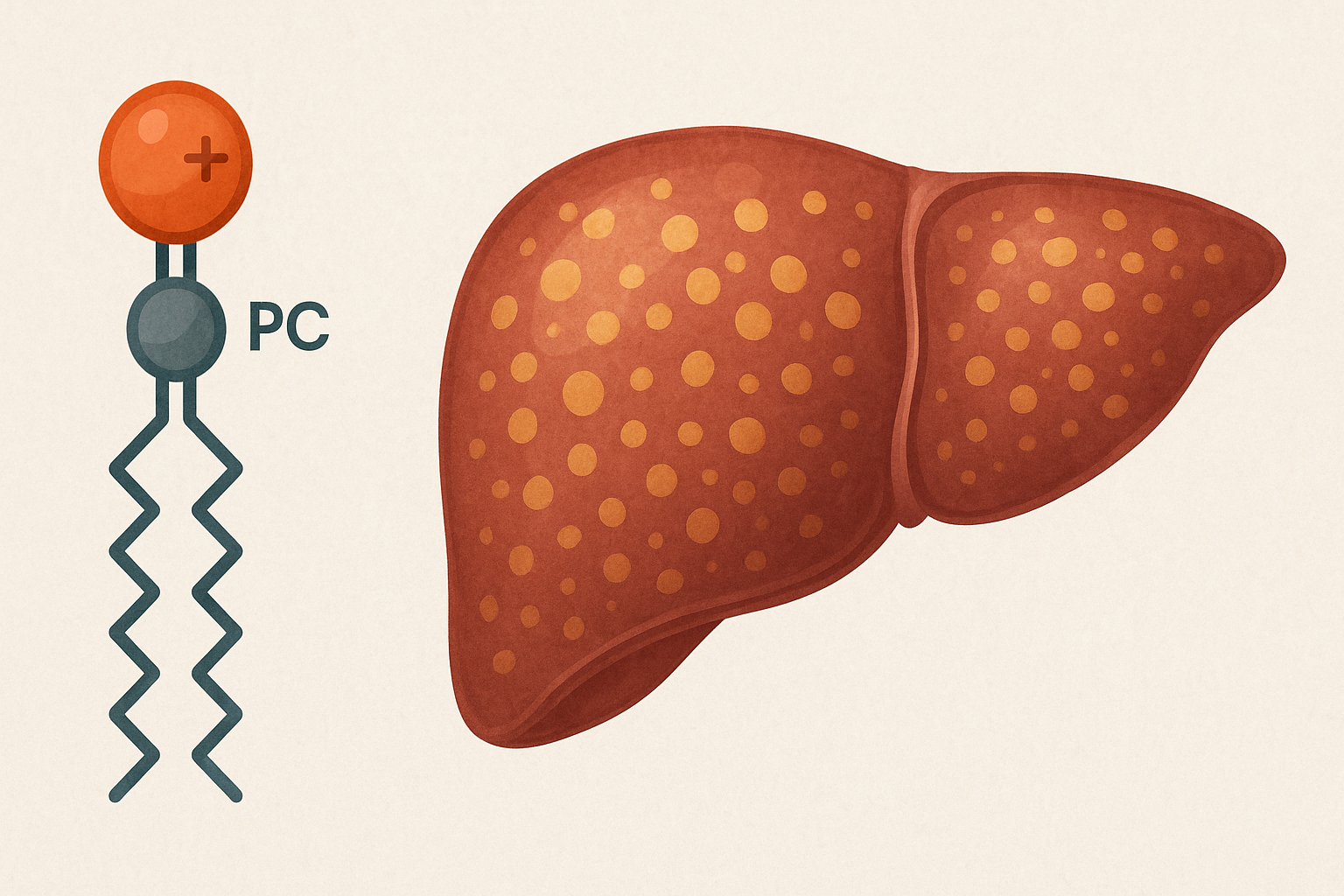
Steatosis is the defining feature of MASLD and a driver of progression toward steatohepatitis and fibrosis. Essential phospholipids (EPLs), standardized extracts rich in phosphatidylcholine (PC, ~72–96%), have consistently demonstrated benefit in reducing hepatic fat content across clinical trials and real-world cohorts.
Evidence highlights
-
Clinical outcomes: Randomized trials and meta-analyses show regression of steatosis with EPLs. In a large real-world study of >2,800 MASLD patients with cardiometabolic comorbidities, adjunctive polyenylphosphatidylcholine (1.8 g/day, 600 mg TID) improved liver echogenicity in ~68% and liver structure in ~43% after 24 weeks. Among those with baseline abnormalities, echogenicity improved in ~81% by week 24.
-
Mechanistic insights: PC has been shown to (1) stimulate fatty acid β-oxidation via PPAR-α activation, (2) suppress de novo lipogenesis by normalizing membrane phospholipid ratios and downregulating SREBP-1–driven enzymes, and (3) enhance VLDL assembly and export by stabilizing apoB and supporting ER–Golgi lipid trafficking.
How PC/EPL is often used in clinical studies
-
Regimen: Typically reported as polyenylphosphatidylcholine (PPC) 600 mg TID (1.8 g/day) for 24 weeks or longer, in addition to standard metabolic management.
-
Monitoring: Outcomes are frequently assessed with ultrasound steatosis grading or CAP, liver enzymes (ALT, AST, GGT), and metabolic markers such as A1c, triglycerides, and non-HDL cholesterol. Imaging reassessment is often described at 3–6 months.
-
Patient profiles: Evidence highlights benefit in MASLD patients with cardiometabolic comorbidities and in those with persistent steatosis despite lifestyle modification.
-
Framing: EPLs are consistently presented in the literature as an adjunctive, steatosis-targeted option studied in combination with diet, physical activity, and cardiometabolic risk factor management.
Overall, PC-rich EPLs represent one of the most consistently studied adjunctive therapies for hepatic steatosis in MASLD, supported by both mechanistic plausibility and reproducible outcomes across trials and observational studies.
References:
- Osipova D, Kokoreva K, Lazebnik L, Golovanova E, Pavlov C, Dukhanin A, Orlova S, Starostin K. Regression of Liver Steatosis Following Phosphatidylcholine Administration: A Review of Molecular and Metabolic Pathways Involved. Front Pharmacol. 2022 Mar 10;13:797923. doi: 10.3389/fphar.2022.797923. PMID: 35359878; PMCID: PMC8960636.
- Maev IV, Samsonov AA, Palgova LK, Pavlov CS, Vovk EI, Shirokova EN, Starostin KM. Effectiveness of phosphatidylcholine in alleviating steatosis in patients with non-alcoholic fatty liver disease and cardiometabolic comorbidities (MANPOWER study). BMJ Open Gastroenterol. 2020 Jan 13;7(1):e000341. doi: 10.1136/bmjgast-2019-000341. PMID: 32095253; PMCID: PMC7011021.
Check Out This Month's Podcast Episode

🎧 New Podcast Episode: Hypothyroidism Through a Functional Medicine Lens
Dr. Yousef Elyaman sits down with functional medicine educator and researcher Dr. Datis Kharrazian to explore hypothyroidism and why it’s one of the most under-recognized autoimmune conditions in clinical practice. With decades of teaching, research, and patient care, Dr. Kharrazian brings unmatched expertise to the conversation.
Here’s what they unpack:
-
Why It’s Commonly Missed: How Hashimoto’s drives 90–95% of hypothyroidism, yet is overlooked in standard practice
-
Lab Testing Beyond TSH: Why comprehensive panels including TPO and thyroglobulin antibodies are critical for early detection
-
Patient Symptoms: Fatigue, brain fog, constipation, cold intolerance, hair loss, and why many patients don’t fit the “classic” picture
-
Root Causes and Triggers: The roles of gluten, dietary proteins, pathogens (H. pylori, EBV, hepatitis C), chemicals, and lifestyle stressors
-
Immune Tolerance: How nutrients like vitamin D, vitamin A, butyrate, and glutathione help regulate autoimmune activity
-
Clinical Frameworks: How to personalize care by identifying triggers, tracking antibodies, and layering interventions step by step
This episode offers practical insights for any practitioner supporting patients with thyroid dysfunction or autoimmunity.
How to watch/listen: Log into your account, select the Bronze Mastermind, and scroll down to the "Expert Interviews, Insights & Podcasts" section to find the episode.
Check Out This Month's Blog Post
The Oral Health–Hypertension Connection
Oral health is often overlooked in cardiovascular care, yet growing evidence shows gum disease may contribute to elevated blood pressure. This month’s blog explores the bidirectional relationship between periodontal disease and hypertension, the inflammatory and vascular mechanisms that link them, and research on treatments that benefit both oral and heart health.
Click here to view the article!
Help Us Grow Our Community!
Know a colleague who would benefit from being part of this Mastermind? Feel free to invite them to join us!
Thank you for being part of our community!
-The FMP Essentials Team


Responses